Once a looming deadline, now it fast approaches. For large and medium enterprises, the European Union Deforestation Regulation (EUDR) will come into effect on December 30th, 2026, while SMEs do not need to be ready until June 30, 2027. Considered a transformative environmental policy, or climate imperialism by its critics, the EUDR will have a massive impact on an industry that is heavily dependent on forests.
The EUDR is part of the European Union’s climate change action policy and was formally adopted in 2023. Since its adoption, it has faced some pushback, a significant amendment, and delaying of enforcement dates. However, by the end of this year, companies will soon have to comply. And so, in this deep dive, we consider what the legislation means for the pulp and paper sector and how businesses are preparing for these changes. But before we jump right in, let us first make sense of what these regulations entail.
Many Sides of EUDR
The timeline of EUDR’s adoption, as mentioned, was fraught with challenges. Initially, in December 2024, the EU postponed the start of compliance by 12 months, but by September 2025, it signaled another delay, citing problems with the Due Diligence Statements, and making time concessions for SMEs. Finally, the date was set for both large companies and SMEs. Essentially, the regulation was devised to prevent further deforestation driven by EU consumer demand, thereby reducing the region’s contribution to climate change and greenhouse gas emissions. EUDR regulates seven agricultural commodities: timber, cattle, cocoa, coffee, rubber, soy, and oil palm. The regulation states “any operator or trader who places these commodities on the EU market, or exports from it, must be able to prove that the products do not originate from recently deforested land or have contributed to forest degradation” (European Commission).
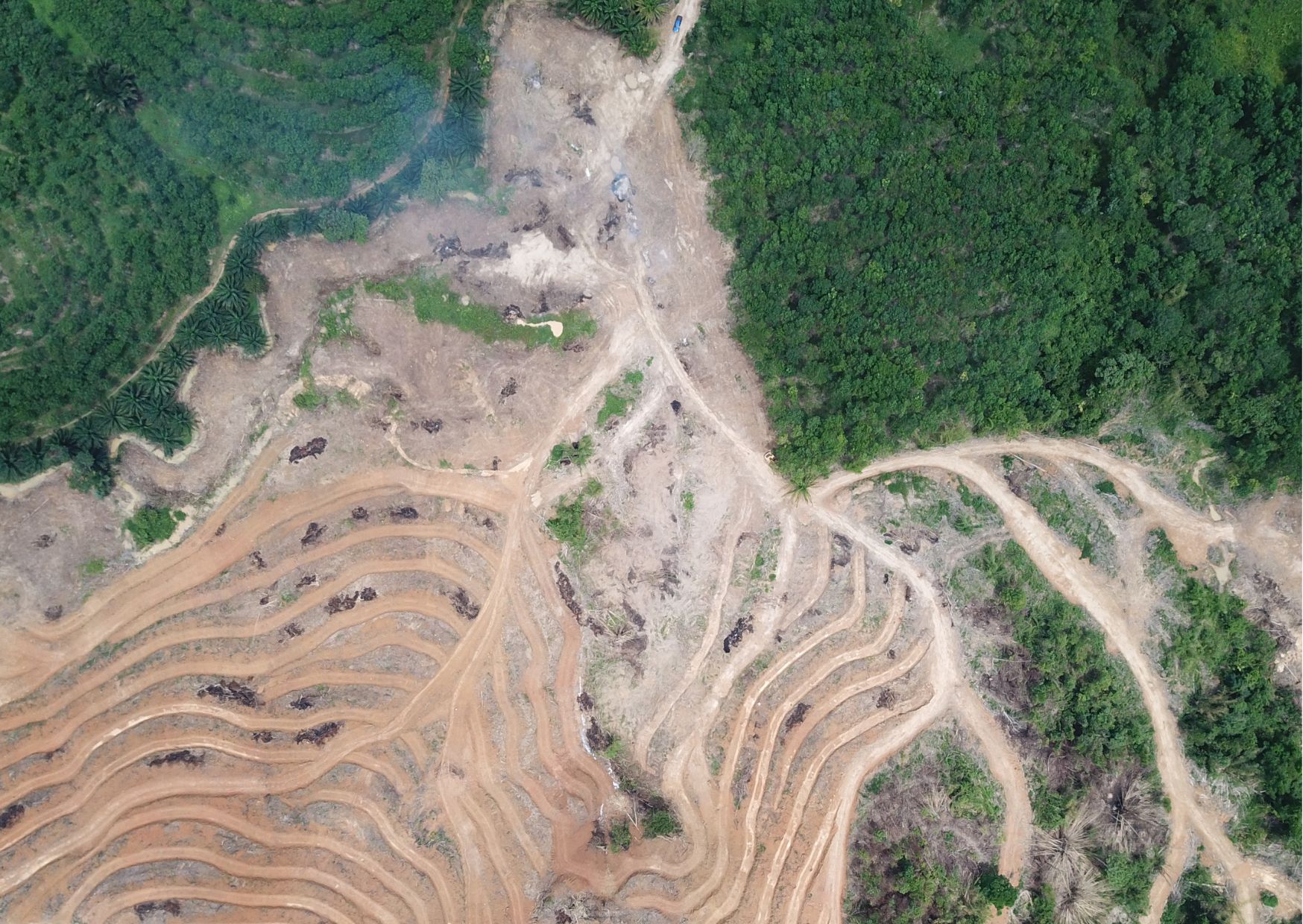
(Deforestation)
This means that businesses must now make efforts to trace the origins of the materials used in their products and ensure they do not contribute to deforestation. They also have to warrant that they are covered by a due diligence statement, meaning the material's origin can be traced to a non-deforested source. If companies fail to comply with these rules, they may face fines of up to 4% of their turnover, and producers who fail to check all boxes must refrain from placing their products on shelves in EU markets. Since the European Union is the second-largest consumer base globally and, in 2025, its consumption accounted for 10% of global forest degradation, these laws are a step in the right direction towards a sustainable, lower-consumption future. Despite good intentions and the urgent need for climate initiatives, the pulp and paper industry faces some hurdles ahead, one of which in particular is data tracing.
A Herculean Task: Tracking and Tracing
One of the key hurdles that requires the tracking skills of a detective is working with the sheer complexity of fiber supply chains. A single paper product may involve multiple harvesting contractors, several traders, a pulp mill, a paper mill, and various converting operations, and each of these could create a gap in the data trail. But it is also widely acknowledged by trade bodies and companies in the sector that tracing the source of paper back to potentially thousands of timber plots would require an extreme amount of effort. For 100% recycled paper, the EUDR does not apply; however, if the paper is mixed, then the source of the virgin fiber must be compliant with EUDR. So, operators have to ensure that all materials are compliant, as mass balancing within the chain of custody is not allowed. This leads to concerns about batch contamination.
Simultaneously, the EUDR requires data with extreme specificity: precise geolocations of the source must be provided, and if a source is larger than four hectares, it must be provided as a polygon. There are also concerns that suppliers may be reluctant to share certain data, or would be unable to, since many mid-sized saw mills still rely on paper-based systems or spreadsheets that cannot handle the precision needs of the EUDR’s Due Diligence Statement, and so these available systems may be limited in their ability to capture such levels of detail. Moreover, engaging with the full supplier base at such depth, harmonizing data, and verifying the accuracy of these geolocation inputs requires substantial operational effort that cannot be rushed.
So, companies are required to build on the technological end, investing in platforms that offer polygon mapping, continuous chain-of-custody tracking, marking real deforestation risks, and developing audit readiness, all at the same time, while integrating with the EU’s TRACES system.
Compliance as a cost? Or an investment?
Critics often view EUDR as a regulatory burden that needs to be reduced or managed, but many companies have instead chosen to consider it as an investment to grow their competitive advantage in the region. There is already high demand across the sector for IT resources, verification tools, and compliance consultancy services, as verified traceability is quickly becoming a key factor for companies exporting forest-based goods to the EU to gain entry into EU trade and other sustainability-focused markets around the world.
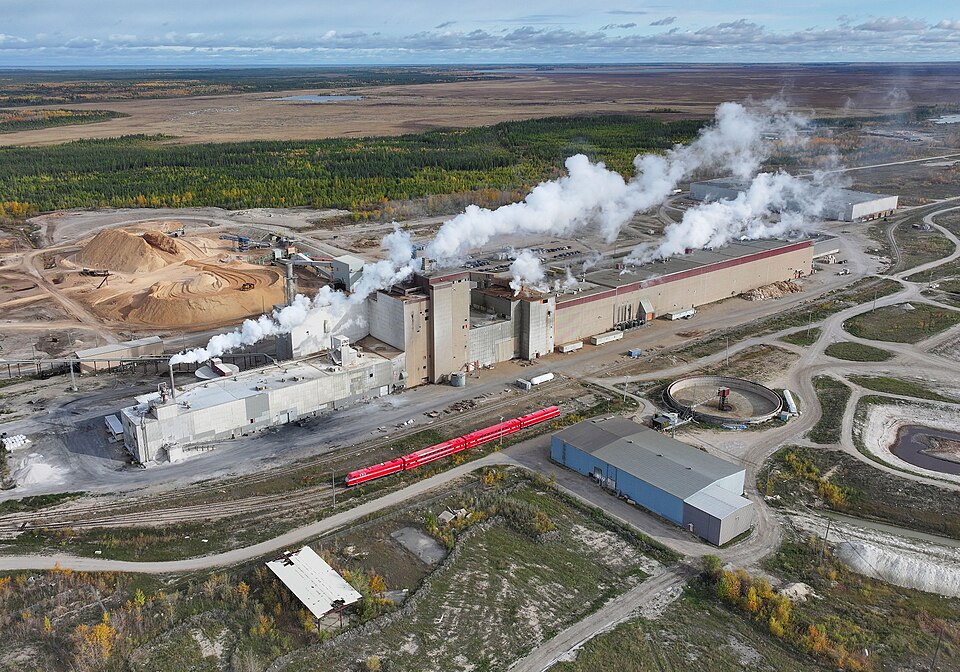
(Large Paper Mill)
Apart from individual operators, whole nations are now attempting to align their policies to support their exports into Europe. For example, Vietnam, which previously only addressed illegal logging, now also includes agriculture-driven deforestation in its regulations, thereby strengthening its national forest policy. This will, in general, lead to more transparent supply chains, allowing producers, traders, and certification agencies to work more closely to eliminate older practices. EUDR also pushes for more circular production to avoid compliance costs by excluding 100% recycled paper from its regulated categories.
Considering EUDR as the “gold standard” for production regulations gestures that environmental degradation cannot be an economic factor. Concurrently, it is expected that there will be compliance costs, and many producers outside the EU highlight that such costs will undermine existing trade relations and even become disruptive. The EUDR should not be viewed as just another compliance checkbox, but rather as a structural upgrade that will allow businesses to enter 2027 with a firm footing.
Share on:


.svg)


