The experiences of a long career present themselves as a map, inundated with peaks of achievement, valleys of challenge, meadows of opportunity, rivers meandering through the day-to-day, and oceans of wisdom. A map of this nature represents the lengthy career of Sami Alsafran, a Business Leader in the Saudi Arabian pulp, paper, and packaging industry. Recently, he also became one of the three Ambassadors at the Pulp and Paper Alliance, supporting our community through his experience, network, and shared intent. When considering his first lessons about industry, he underscores that nothing moves without systems. Not pulp. Not paper. Not people.
Venturing into the paper industry for Alsafran was a mixture of chance and passion, he reflects, “The roots of my career are firmly set in engineering and operations, specifically in chemical engineering”. In Saudi Arabia and in many other Middle Eastern countries, where petrochemicals shaped both the economy and the aspirations of a generation, the career paths available to young people were often predestined. “Growing up,” he recalls with a laugh, “our career paths mostly diverged between doctor and engineer; as a young person with little agency, my elder brother took my file and enrolled me in the university, and the foundations were then laid”.
When he graduated with a B.Sc. in Chemical Engineering from King Fahd University of Petroleum and Minerals (KFUPM) in 1992, the pulp and paper industry in Saudi Arabia was in its nascent stage. He entered the workforce in the water treatment and supply industry before gravitating towards paper manufacturing, where connections from his early career threaded through: water is one of the largest inputs in the process, and the technical foundations transferred directly.
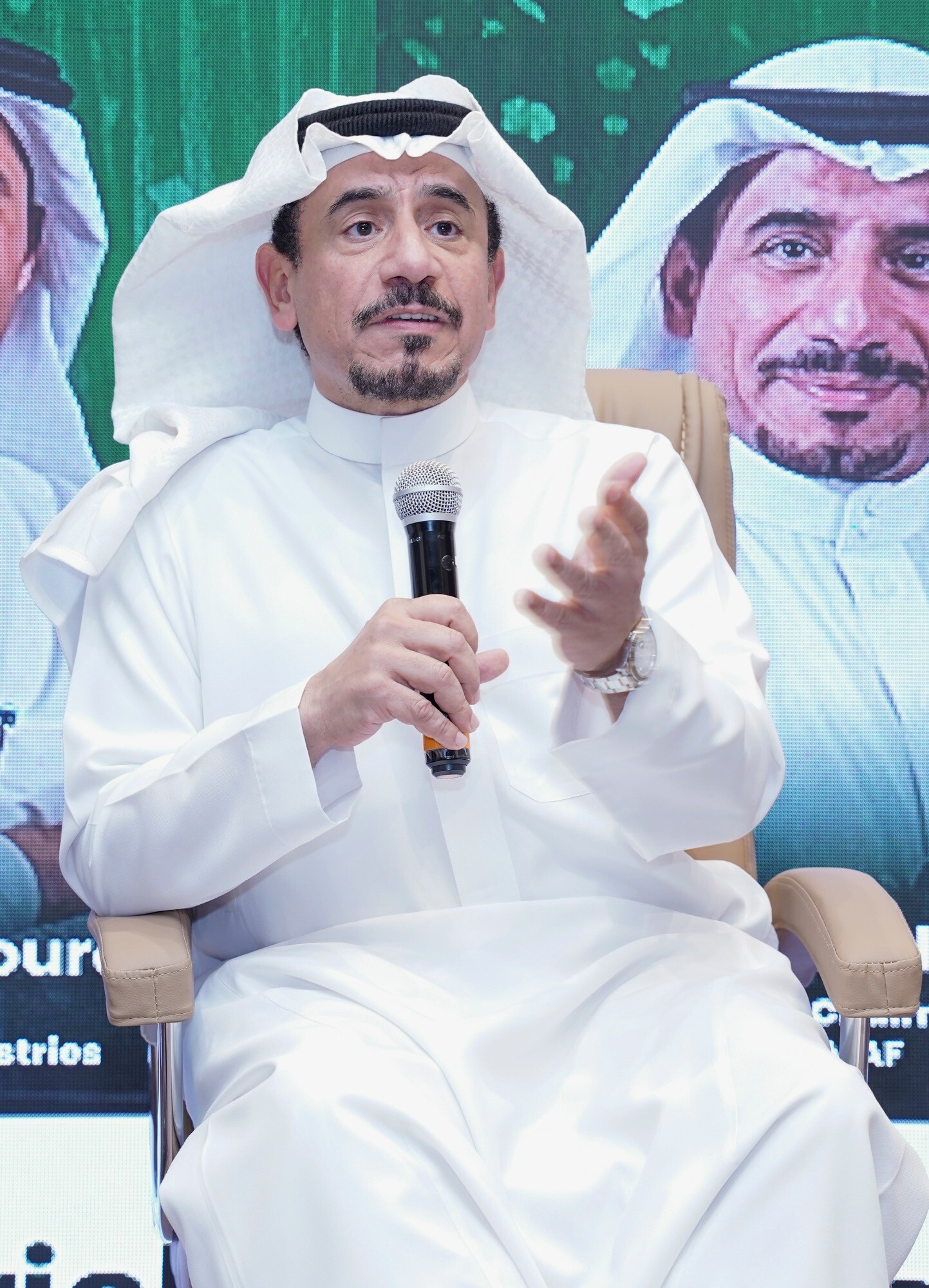
(Sami Alsafran)
“Pulp and paper manufacturing is not a forgiving business”, he states, “It requires discipline, consistency, and a deep understanding of the process.” That ethos has guided his work across more than two decades in the industry, where he combined strong technical foundations with the commercial perspective gained from senior leadership roles. He came to view operational rigor and financial discipline not as separate functions, but as two sides of the same craft.
In a frank and direct manner of speaking, Alsafran comments, “It is always easy to lecture about how pioneering or how great our work has been. But it is also critical to understand that materializing the right opportunity is key to a successful venture”. The opportunity he speaks of arose from the realization that the Middle East required a fundamentally different paper-industry model. Unlike Indonesia, Brazil, or Scandinavia, the Middle East and Saudi Arabia have limited forestry resources, leaving resource-dependent manufacturers exposed to global volatility, including disruptions in supply chains.
The regional answer, he believes, has to be built around recycling, localisation, and integration. “Long-term success depended on recycling-led production, integration, and financial discipline,” he adds. These are not abstract preferences; they are, in his view, the only durable response to the structural realities of the region.
Through his ongoing industry engagement, including his role as President of the Arab Federation of Paper, Printing and Packaging Industries (AFPPPI), Alfsafran has gained a critical vantage point of the pulp and paper industry in the MENA region. He explains that the Middle East accounts for over 6% of global demand for container board and is actively importing new technologies (especially low-GSM tech) from Asia to enable expansion. Despite technological import, the trend he emphasizes will shape the region is “localization”. “What is largely happening in the pulp and paper industry is intense localization, whether in sourcing, production, or distribution. Globally, we will see this trend of more localized production in the years to come”, he attests.
Almost mathematically explaining this observation, he adds, “Over the past two decades, rising consumption driven by population growth, urbanization, and e-commerce has also forced the region to invest in domestic production rather than rely on imports. Customers feel compelled to reach out to local suppliers to replenish stock, thus avoiding overstocking. Finally, localization of industries protects supply chains and prevents disruptions”.
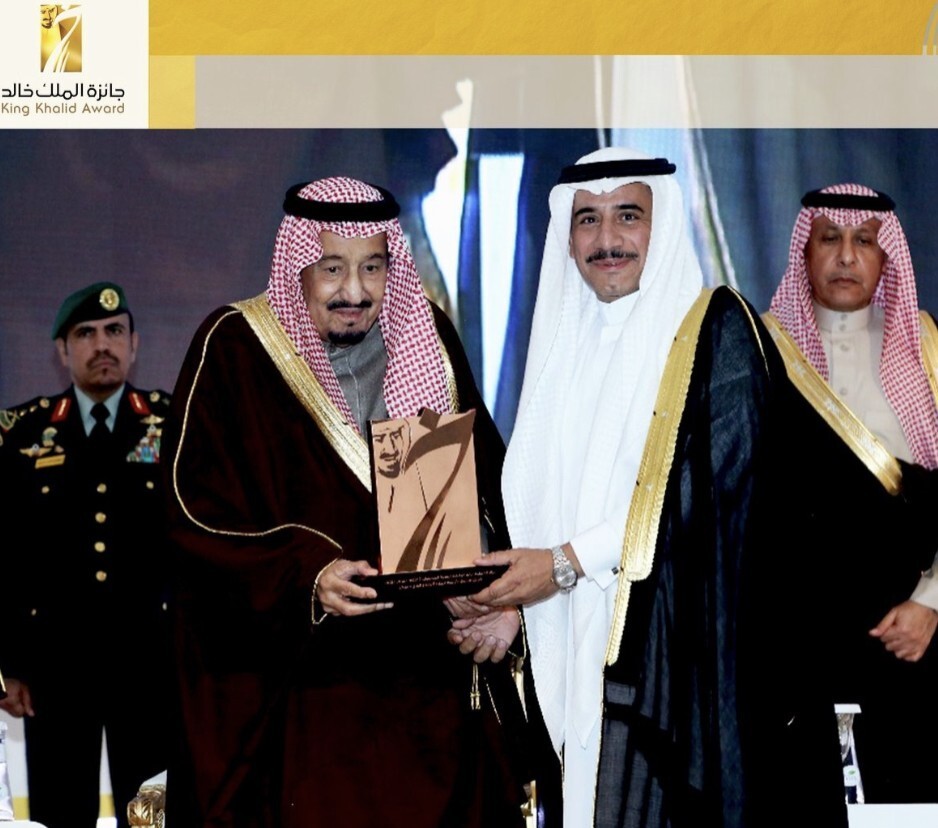
(Sami Alsafran receiving the King Khalid Award)
Despite advocating for localization, Alsafran understands that it must be achieved without compromising quality, which entails greater operational complexity in recycling-led manufacturing, where fiber quality, energy consumption, and water efficiency are central to competitiveness. Maintaining a stoic tone, he adds, “There are some realities that the pulp and paper industry in the region also needs to consider, such as high capital investments and the need to reduce energy consumption.”
These are not the only concerns for the pulp and paper industry. In recent months, the mounting geopolitical upheavals have prompted companies across the region to assess their supply chain dependencies, customer proximity and service, as well as energy sources and volatility. “Large and small producers have different approaches: the larger producers focus on integration, efficiency, and fiscal prudence, while the smaller ones emphasize flexibility, niche positioning, and partnerships”, Alsafran points out.
Another concern stemming from global events is the reduction in production capacity, since many oil refineries were also attacked during this crisis, and the paper industry's significant energy requirements are denting paper production. “These impacts have caused the prices to increase from January onwards. Ultimately, we understand that consumers will bear the costs, but at the moment, consumer spending is also restrained”, he acknowledges.
On a personal level, Alsafran considers how the crisis has reinforced the necessity of strategic relations. “Strategy is not a gelatinous word,” he says, smiling slightly at the phrase. “It is a concrete fact, and one must develop strategic partners across the region.”
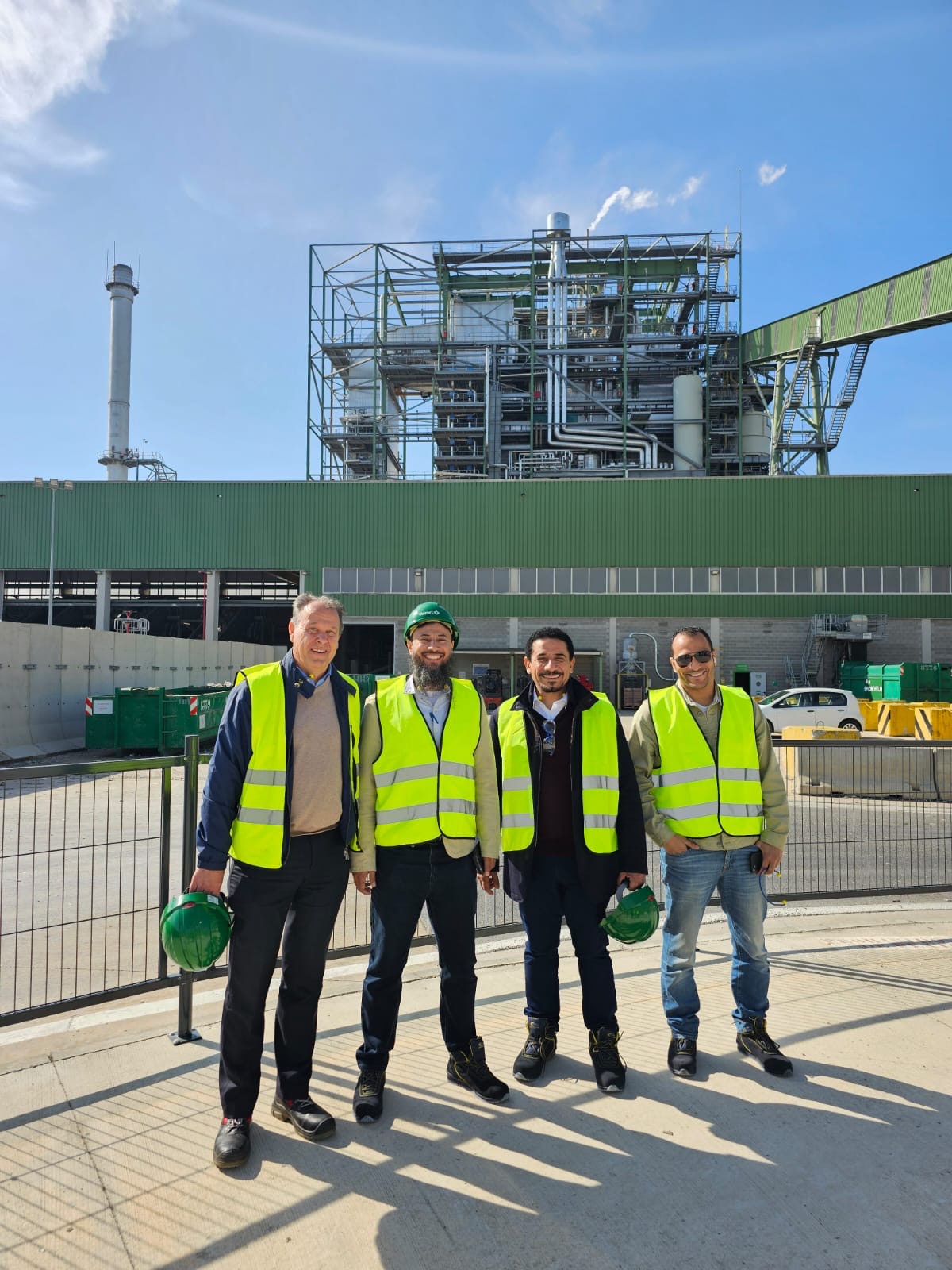
(Sami Alsafran with peers)
Besides this, his engineering and technical background naturally draw him towards technological advances. He worries that if businesses do not consider and capitalize on the latest technologies, it will have negative impacts. Paper is much more complex than it appears; it is, as he lists, “a mixture of the sciences, i.e., mechanical, electrical, chemical, and technological (AI)”. He further insists, “The appropriate use of technology is no longer a fanciful endeavor; it is a must.”
Yet as he discusses operational, technical, and business aspects of the industry, he repeatedly centers on a simpler variable: people.
He adds, “The pulp and paper industry rewards scale, discipline, and operational excellence, but without the right people and the right team, we could not have achieved this level of success.” This conviction is one of the threads connecting his executive career to his present-day priorities. He has long championed the development of young Saudi talent in the paper industry — work he sees as directly tied to the human capital ambitions of Saudi Vision 2030. The deliberate broadening of participation in the workforce, including increased representation of women across management and governance, falls within the same framework.
Now in advisory roles, Alsafran underscores the importance of networking, advising, and mentoring young executives and investors as they navigate the realities of doing business in Saudi Arabia, which he believes is often misunderstood. The Saudi business environment is much more open now. He explains that setting up a business as a foreign investor is simpler and far more efficient, with day-by-day improvements making it more affordable, accessible, and easier to navigate.
“If you are an international company based in Europe and wish to venture into the Middle East,” he says, “you will conduct a feasibility study with a consultant who will somehow prove to you that it is a good idea. But successful business analysis comes from those working on the ground and feeling the heat of the region’s market forces.”
At the same time, Alfsafran approaches networking events with a certain selectivity and purpose, with a foresight on the years to come: “Most talks focus on developments driven by the current global upheaval, which is causing people to lose sight of the next year or years. I am interested in what the next few years will look like, what will be the norms and the new realities? What is the market sentiment, and what are some emerging risks? I am also interested in how trends are shaping technology and investments.”
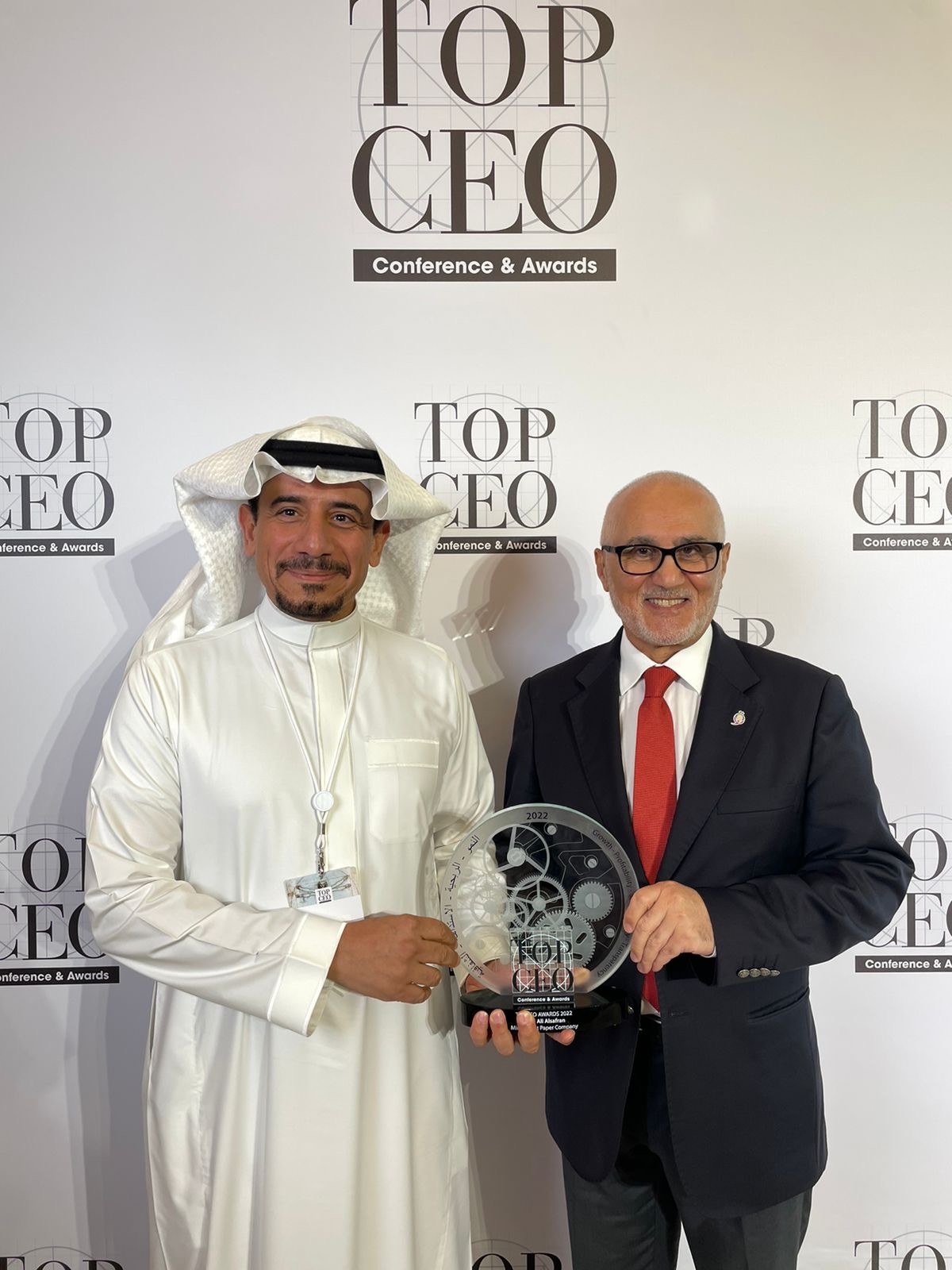
(Sami Alsafran receiving the Top CEO Award)
Despite a no-nonsense approach to networking events, he speaks warmly about his interest in mentorship, which he regards as a duty and responsibility for those in senior leadership positions. He rejects the idea of solitary CEOs, executives, and one-man shows, and remarks how mentorship also shaped his career. “Mine is a no hero story,” he says. “There were some with more experience than I, who guided me along, and now I want to pass that on.”
Alsafran’s pragmatic approach to the pulp and paper industry is informed by foresight, systematic execution, and not reaction. Simultaneously, his wisdom is rooted in decades spent in boardrooms, on the factory floor and industrial zones, and through moments of exponential growth and crisis alike. If Alsafran has learned anything from the paper business, it is that resilience requires determination, moving from operation to operation, system to system, and strategy to strategy. And at the present moment in his career, his sense of purpose is firmly grounded in supporting new talent, opening doors, guiding paths, making space, sharing wisdom, and keeping a finger on the pulse.
Share on:


.svg)


