Ports reside in the liminal space, a bridge between land and water, creating a microcosm of their own, and a few people understand this as deeply as Daniel Saar, President of the Board (CEO) at DB Port Szczecin. On a clear day, it takes less than 10 minutes to drive from DB Port Szczecin to the German border, a fact that Daniel finds worth reiterating. But there is a much deeper significance to this fact that accentuates the Port of Szczecin’s orientation on the mental map of those who have not given much thought to the northwest corner of Poland.
“We do not think of borders as a barrier”, Daniel articulates. “This is simply Europe”.
This phrase also shines light on Daniel’s approach to developing the Port of Szczecin: pragmatic, ambitious, and more importantly, boundless. Daniel has worked for over 16 years in the DB Group, developing DB Port Szczecin from a newly privatized facility to a critical hub for pulp and wood products in Poland, a NATO-designated port with operational capabilities that keep the port moving 24 hours a day, 365-days a year, handling cargo from far corners of the globe.

(Daniel Saar, President of the Board (CEO), DB Port Szczecin)
But Daniel was not a shipping man by training, rather a civil engineer, and this particular aspect permeates his language as he moves between the technical and strategic while describing the port's functioning. In 2010, when the DB Port Szczecin officially acquired a major stake in the Port of Szczecin, Daniel was specifically hired as a Project Manager to design, construct, and equip the newly built container terminal here in Szczecin. "There was no upgrade, no renovation of an existing facility," he says. "The terminal was built from zero."
Over the years, he has held various roles in the company: Operations Manager, Manager of the Technical Department, Board Member for the last ten years, and CEO for the past six years, which he reasonably calls his “long story short” of his decade at DB Port so far. Today, he also leads Transfracht Polska, a cargo handling company that operates beyond the port's gates, and serves as president of the supervisory board of Infra Silesia, a rail construction firm within the Deutsche Bahn group.
The reason for such diversity of roles in his career at DB Port Szczecin relies on how the company is structured, he explains, “I took on such diverse responsibilities during my time at DB because managers in our group typically do not hold a single role in one location. We tend to move between different roles in different places”.
(Pic Credit: DB Port Szczecin)
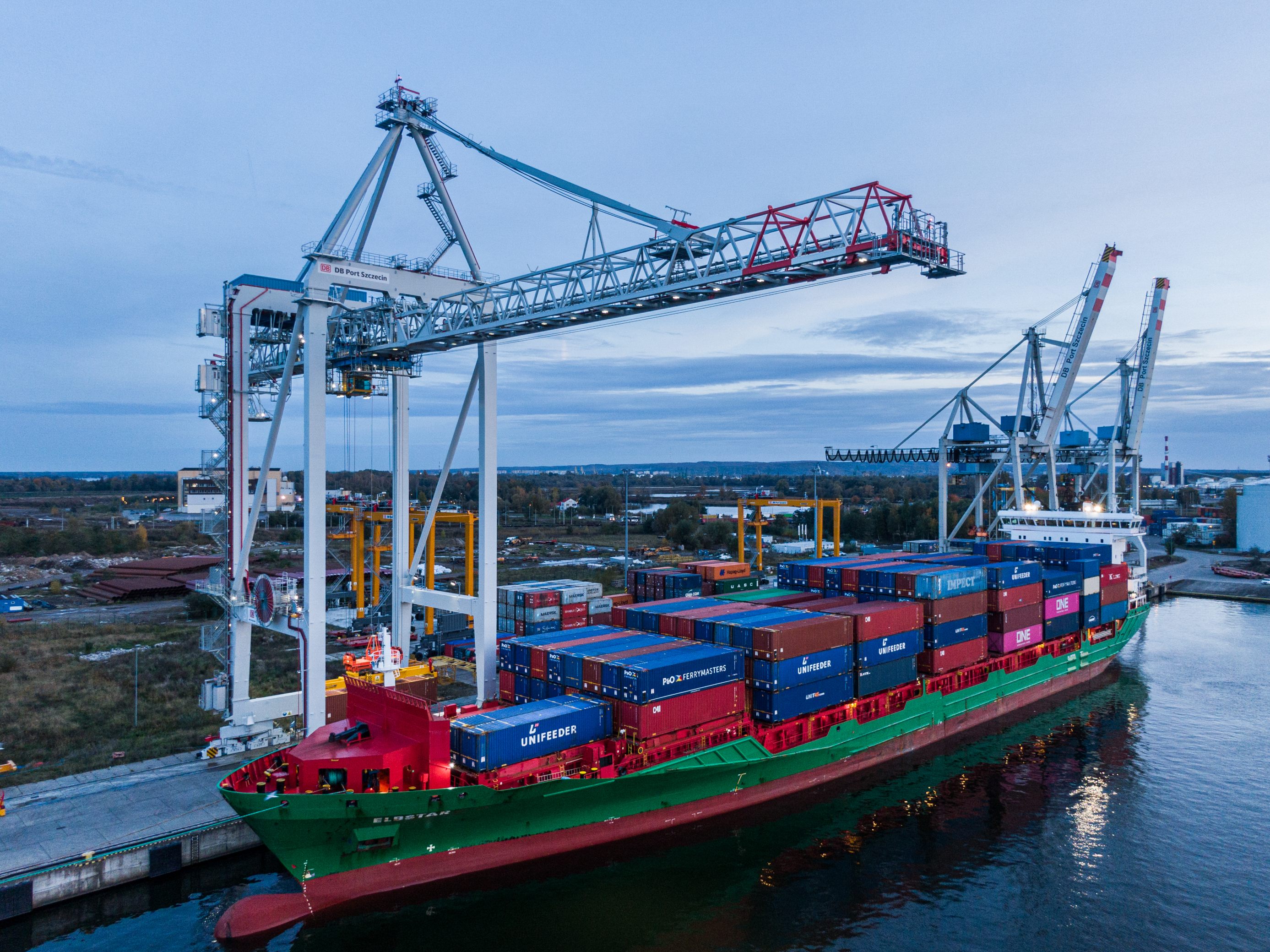
The port itself sits on 400,000 square meters of land along 3 kilometers of quays operated by DB Port Szczecin, in a city that most Western Europeans know by its German name: Stettin. Daniel further highlights this connection, “We have a strong historical connection to Germany. Before 1945, the port of Szczecin belonged to Germany and formed part of the German logistics network. Since Poland joined the European Union, those corridors have reopened, and we benefit directly, both as a port and as part of the Deutsche Bahn group”.
Around 30% of DB Port Szczecin’s customers are connected to the German market, and he adds, “We cooperate closely with companies in Germany, Scandinavia, and across Poland, and the cargo we handle comes from around the world, such as Africa, China, India, and South America”.
DB Port Szczecin’s accelerated growth is also a response to Poland's export growth. Poland is currently the largest producer of white goods in Europe, such as refrigerators, washing machines, and mixers, and it also leads in wooden products and furniture. It is among the top producers of grain, poultry, and pork in the EU and, interestingly, the fifth-largest producer of cosmetics globally. Daniel understands the big and small economic cogs at play that support their Port.
He mentions, “Each decade seems to reveal a new area where Poland excels. GDP has grown consistently for the past 30 years, and Poland is one of only two countries in the region to have posted continuous growth throughout that period. Production and consumption are both rising in the country, and that is reflected directly in cargo volumes through our port. So, the investments we have made are not optional; without them, we would not be able to keep pace with growing cargo volumes. Thus, our trajectory is also a reflection of Poland’s growing economy”.
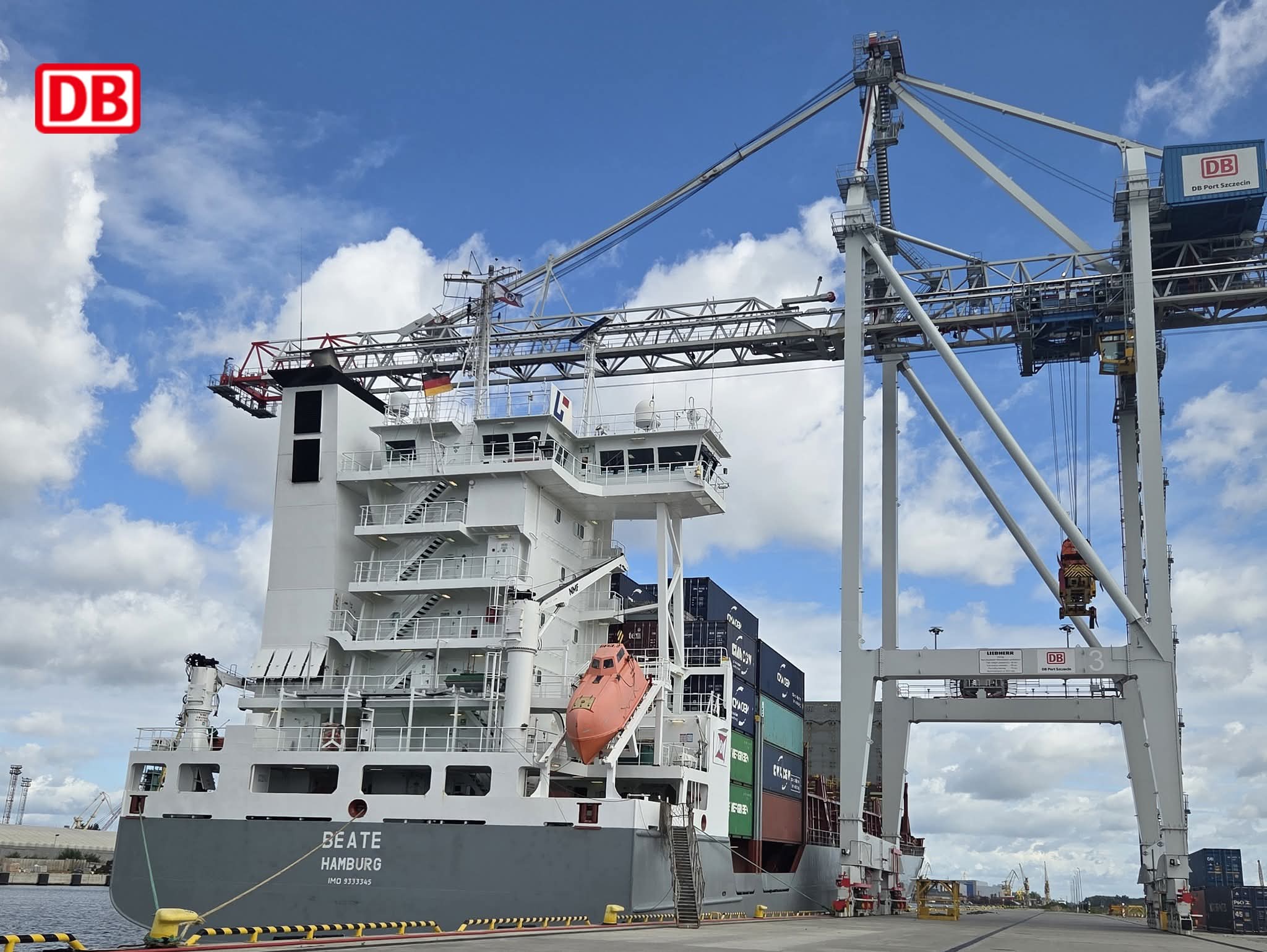
The investments he speaks about are the state-of-the-art ship-to-shore (STS) cranes, rubber-tired gantry (RTG) cranes, and reach stackers that enable the Port’s handling. Moreover, beyond the modern container terminal, DB Port Szczecin has also built a bulk terminal and developed extensive warehousing.
The projects have primarily been funded by DB Cargo Group, but he proudly reports, “Along with DB Cargo, we have also received some funding from prestigious EU grants”.
This robust port requires high precision to function. “Maintaining such a fleet at full operational capacity requires not just good maintenance planning but also a buffer, ensuring you always have more equipment than necessary so that servicing and renewal do not create delays. We allocate significant capital expenditure each year for fleet renewal based on motor-hour thresholds. This year, for example, we have taken delivery of four new reach stackers. While reach stackers are primarily used for containerized cargo, including containerized pulp, they also indirectly contribute to the efficiency of our overall operation”, he carefully explains.
(Pic Credit: DB Port Szczecin)
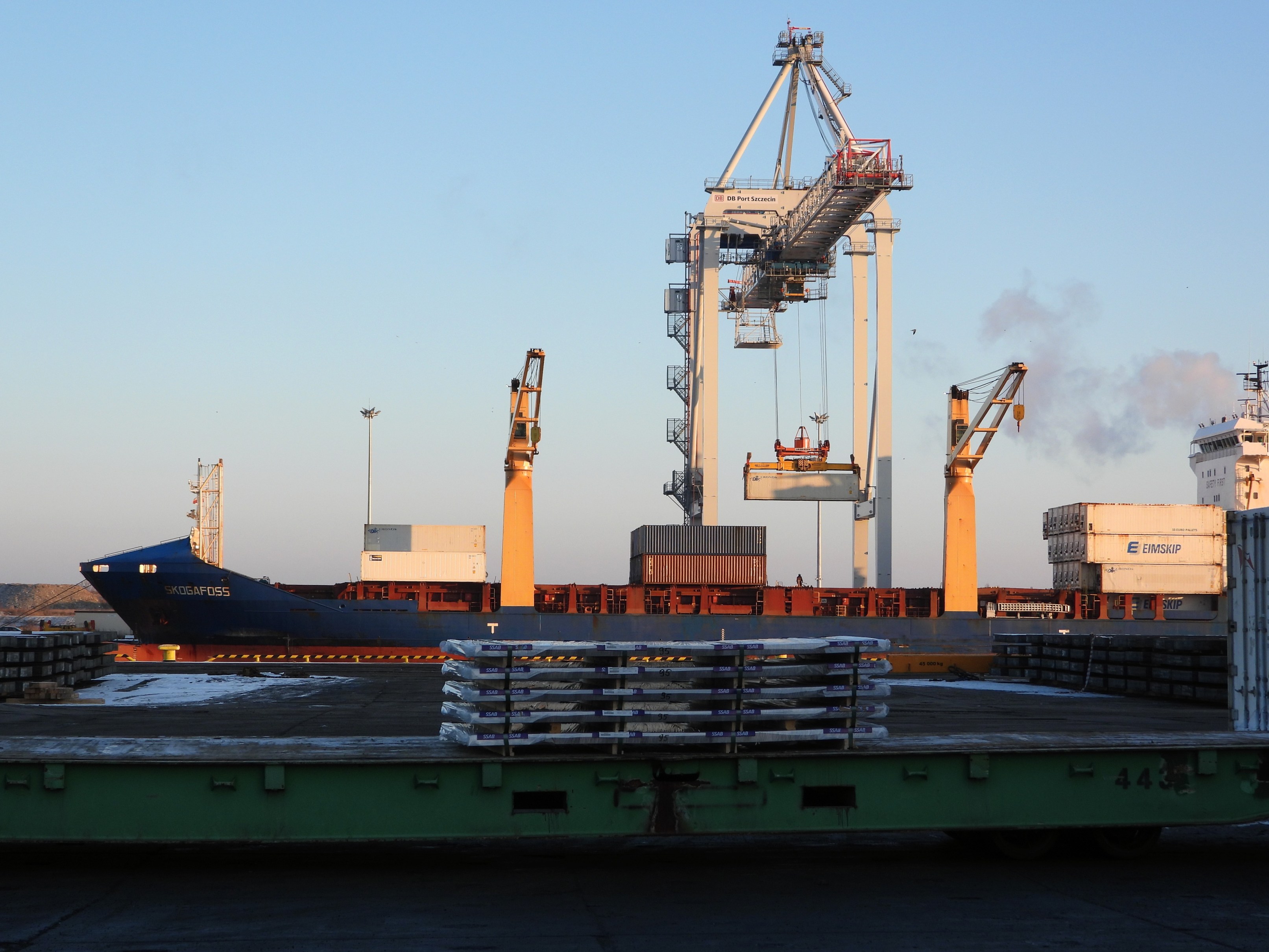
The port operates on what Daniel calls a "four-pillared" structure: containers, bulk cargo, general cargo, and project cargo. Using this load-bearing metaphor, Daniel elucidates how, when certain cargo shrinks, the other sustains.
“For example”, he continues, “when steel volumes drop, the warehouses absorb different goods. When one segment contracts, another expands”. This elasticity, he argues, is what allowed the port not merely to survive but to grow through the Lehman Brothers crisis (whose effects reached Poland around 2011), Brexit, two Russia-Ukraine conflicts, and a global pandemic.
When, at a recent maritime panel discussion, Daniel was asked how these global events impacted the Port, his answer surprised the audience. “I should say upfront that it is not a political answer, and it is not necessarily a popular one. But it is an honest one. All these crises, in net terms, benefited us”.
He explains, “If you look at our numbers across those periods, it is difficult to say anything else. Of course, these disruptions shake the market, but if you have a robust business model and a quick mind, you can turn disruption into an opportunity”. This is how their four-pillared structure supported them through the years.
Sharing the most recent statistics, of which Daniel has plenty, he informs, “The port has posted double-digit growth in each of the past two years. We expect to handle roughly 400,000 tonnes of pulp and related wood products this year. Plus, our covered storage now spans 70,000 square meters, with an additional 15,000 planned. The connection to the Baltic Sea has been deepened to 12.2 meters. And the customer roster has grown from approximately 30 when DB took over to around 200 today.”
Additionally, for the pulp and paper industry in particular, Szczecin's location is quite favorably positioned on the line between the pulp producing Scandinavian countries and the markets that lie in the south: Germany, Austria, Czech Republic, and Slovakia. "If you have a pulp mill in southwestern Poland and the pulp is coming from Finland," Daniel notes, "routing through Hamburg, Rostock, or Lübeck adds unnecessary distance and cost. Routing it via Szczecin shortens the logistics chain."
These ports are not in competition with DB Port Szczecin, because the purposes served are different. In the context of these ports in the North Sea and the Baltic, there are significant differences. He clarifies, “Between Szczecin and Gdańsk, a stretch of approximately 400 kilometers, there is no other proper seaport. Compare that to the German coast, where you find a port roughly every 150 kilometers. This scarcity makes our port valuable.”
“What DB Port Szczecin offers that some Western European ports do not, is round-the-clock operation, surplus land, and a stable workforce. Labor shortages that have constrained ports elsewhere in Europe have, so far, not materialized in Szczecin to the same degree”, he asserts.

(Pic Credit: DB Port Szczecin)
Furthermore, when the Russia-Ukraine war began in 2022, the port became a designated hub for NATO cargo, thereby contributing to defense supply chains. The port diligently undertook this responsibility. "This cargo is often treated as a priority," Daniel promptly adds.
There is a side of the port that Daniel mentions almost as an aside, yet it is an exciting piece of information that lingers. Polish and European film crews, he says, have been approaching the port for a decade, drawn by its atmospheric setting that suits many crime, noir, or war films, with a backdrop of quays, cranes, and the gray, wintry tones of the Baltic.
It is a small detail, but it speaks to the way Daniel regards the port not merely as infrastructure but as a living, moving, and growing system. A port, he notes, is where shipping, rail, road, and terminal operations converge in a single location. It is inherently cinematic, with the coordinated performance of each element to create smooth cargo movement. At times, it is also inherently unpredictable, which is precisely what keeps the job exciting. "If you enjoy tackling the unpredictable," he said, "you will thrive here."
Beyond their services, Daniel also speaks about the port’s relationship with the broader industry. “What we simply want people to know is that: we exist, we are flexible, we can adapt to diverse needs, we have the staff, we have the equipment, we have the backing of a strong group, and our customers tend to stay with us for a long time”, he lists out.
One aspect of that loyalty, he believes, stems from their choice not to operate a freight forwarding department. While the Port has all the right conditions to be able to easily establish one, they deliberately choose not to because many of their customers are freight forwarders themselves.
"They can work with us knowing that we will not compete with them for the business they bring us, and that is a position we maintain consistently,” Daniel resolutely assures.
For companies looking to access the Polish or Central European market, DB Port Szczecin offers more than a berth and a few cranes. The team is capable of designing and managing a complete logistics chain.
(Pic Credit: DB Port Szczecin)
“We have the experience, the infrastructure, and the connections to do that. Whether a company is currently operating out of Bremen, Hamburg, or Gummersbach and has customers emerging in Poland, we can help structure the logistics from end to end,” he says.
Szczecin’s geography also makes the case: Berlin is accessible via a nearby regional airport. Prague is roughly four-and-a-half hours to five hours by road. Hamburg is four hours. And of course, the German border is just a few minutes away, and customers who work with Szczecin once continue to remain with us.”
To make their case further, this year, DB Port Szczecin is joining the Pulp and Paper Alliance’s Second Annual Conference as a Bronze Sponsor. In the most unadorned terms, he explains why these meetings are important for ports such as DB Port Szczecin.
“Events like the Pulp and Paper Alliance conference allow us to have conversations in a larger context, to understand where the industry is heading, and to make the case for what Szczecin can offer to partners who may not yet know us well.”
Daniel’s decade at DB Port Szczecin is a testament to a particular kind of patience and the willingness to stay and witness the microcosm evolve and deeply engage with the liminality: between east and west, land and sea, between the structured German corporate life and unpredictable working port, and on a personal level, between being a civil engineer and a logistician. As Poland has spent three decades quietly becoming an economic force, Daniel made sure that Szczecin has matched that energy.
Share on:


.svg)


